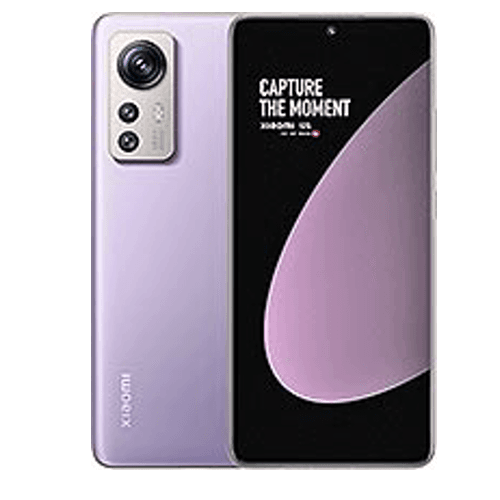
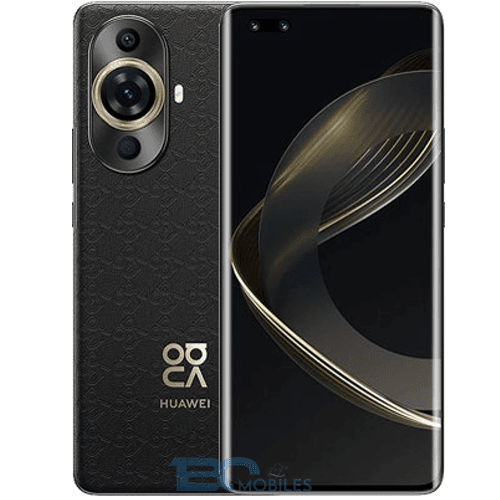
Here’s a comprehensive comparison between the Xiaomi 14T Pro and the Huawei Nova 13 Pro.
📑 Table of Contents
- 📏 Size Comparison
- 🖥️ Display Comparison
- 🔋 Battery Life
- ⚡ Charging Speed
- 🔊 Speaker Test
- 🚀 Performance
- 📊 Benchmark Performance
- 📸 Camera Comparison
- 🎥 Video Quality
- 🏆 Overall Verdict
📏 Size Comparison
Feature | Xiaomi 14T Pro | Huawei Nova 13 Pro |
|---|---|---|
Height | ~162.8 mm | ~160.8 mm |
Width | ~75.6 mm | ~74.8 mm |
Thickness | ~8.4 mm | ~7.9 mm |
Weight | ~208 g | ~198 g |
Display Size | 6.78-inch AMOLEDwith curved edges | 6.7-inch OLEDwith curved edges |
Screen-to-Body Ratio | ~91.5% | ~91% |
Bezel Thickness | Ultra-thin bezels (~1.9mm top/bottom, ~1.6mm sides) | Minimal bezels (~2.0mm top/bottom, ~1.6mm sides) |
Build Material | Aluminum frame + Gorilla Glass Victus 2 | Aluminum frame + Kunlun Glass (Huawei proprietary) |
Form Factor | Tall and slim design, optimized for media consumption | Compact and lightweight design, slightly easier to handle |
Fingerprint Sensor | In-display optical sensor | In-display ultrasonic sensor |
Water Resistance | IP68 (dustproof and water-resistant up to 1.5m for 30 minutes) | IP67 (dustproof and water-resistant up to 1m for 30 minutes) |
🖥️ Display Comparison
Feature | Xiaomi 14T Pro | Huawei Nova 13 Pro |
|---|---|---|
Display Type | AMOLED | OLED |
Display Size | 6.78-inch | 6.7-inch |
Resolution | QHD+ (3200 x 1440 pixels) | FHD+ (2400 x 1080 pixels) |
Pixel Density | ~515 PPI | ~395 PPI |
Refresh Rate | 120Hz Adaptive Refresh Rate | 120Hz Fixed Refresh Rate |
Touch Sampling Rate | 480Hz | 300Hz |
Brightness | Peak Brightness: 2000 nits | Peak Brightness: 1500 nits |
HDR Support | HDR10+ | HDR10 |
Color Gamut | DCI-P3 (100%) | DCI-P3 (97%) |
Screen Protection | Gorilla Glass Victus 2 | Kunlun Glass (Huawei proprietary) |
Curved Edges | Slightly Curved Edges | Heavily Curved Edges |
Always-On Display | Yes, with advanced customization options | Yes, with basic customization options |
Sunlight Visibility | Excellent due to high brightness and anti-reflective coating | Good, but slightly less effective in direct sunlight |
🔋 Battery Life
| Feature | Xiaomi 14T Pro | Huawei Nova 13 Pro |
|---|---|---|
| Battery Capacity | 5000 mAh | 4800 mAh |
| Battery Type | Li-Po (Lithium Polymer) | Li-Po (Lithium Polymer) |
| Screen-On Time (SOT) | ~8-9 hours (mixed usage) | ~7-8 hours (mixed usage) |
| Standby Time | Up to 2 days | Up to 1.5 days |
| Charging Speed | 120W wired (0-100% in ~20 mins) | 100W wired (0-100% in ~25 mins) |
| Wireless Charging | 50W wireless | 50W wireless |
| Reverse Charging | Yes (10W) | Yes (10W) |
| Battery Optimization | MIUI Power Saving Modes | EMUI Power Saving Modes |
| Real-World Usage | Excellent for heavy users (gaming, streaming) | Good for moderate to heavy usage |
Also Read : OnePlus 13R vs. Huawei Nova 13 Pro
⚡ Charging Speed
| Feature | Xiaomi 14T Pro | Huawei Nova 13 Pro |
|---|---|---|
| Battery Capacity | 5000 mAh | 4800 mAh |
| Wired Charging | 120W HyperCharge | 100W SuperCharge |
| Wireless Charging | 50W | 50W |
| Reverse Charging | 10W (Reverse wired) | 10W (Reverse wired) |
| Charging Time (0-100%) | ~20 minutes (120W) | ~25 minutes (100W) |
| Charging Technology | HyperCharge with advanced cooling | SuperCharge with AI power management |
| Adapter Included | Yes (120W adapter in-box) | Yes (100W adapter in-box) |
🔊 Speaker Test
| Feature | Xiaomi 14T Pro | Huawei Nova 13 Pro |
|---|---|---|
| Speaker Setup | Stereo speakers (Dolby Atmos support) | Stereo speakers (Histen Sound Effects) |
| Loudness | Excellent (high volume output) | Very Good (balanced volume output) |
| Bass Performance | Deep and punchy | Moderate bass, clear mids |
| Clarity | Crisp and clear audio | Clear audio with good detail |
| 3D/Spatial Audio | Supported (Dolby Atmos) | Supported (Histen 3D Audio) |
| Audio Enhancements | Dolby Atmos, Hi-Res Audio certification | Histen 8.1, Huawei SuperSound |
| Headphone Jack | No | No |
| Bluetooth Audio | Bluetooth 5.3, aptX HD support | Bluetooth 5.2, LDAC support |
| Microphone Quality | Noise cancellation during calls | AI noise reduction during calls |
🚀 Performance
| Feature | Xiaomi 14T Pro | Huawei Nova 13 Pro |
|---|---|---|
| Processor | Qualcomm Snapdragon 8 Gen 2 | Huawei Kirin 9000S |
| GPU | Adreno 740 | Mali-G78 MP24 |
| RAM | 8GB / 12GB LPDDR5X | 8GB / 12GB LPDDR5 |
| Storage | 128GB / 256GB / 512GB UFS 4.0 | 128GB / 256GB / 512GB UFS 3.1 |
| Cooling System | LiquidCool Technology | Ultra-Thermal Cooling |
| 5G Support | Yes | Yes |
| AI Capabilities | AI Engine (Snapdragon) | Da Vinci Architecture (NPU) |
| Gaming Performance | Excellent (optimized for high-end gaming) | Great (optimized for AI-based gaming) |
| Multitasking | Smooth (12GB RAM + UFS 4.0) | Smooth (12GB RAM + UFS 3.1) |
| Software Optimization | MIUI 14 (based on Android 13) | EMUI 13 (based on HarmonyOS 3) |
📊 Benchmark Performance
🔹 GeekBench 6
| Device | Single-Core Score | Multi-Core Score |
|---|---|---|
| Xiaomi 14T Pro | 2,533 | 6,257 |
| Huawei Nova 13 Pro | 989 | 2,911 |
🔹 Antutu 10
| Device | Antutu Score |
|---|---|
| Xiaomi 14T Pro | 2,215,737 |
| Huawei Nova 13 Pro | 607,283 |
🔹 3DMark (Wild Life)
| Device | 3DMark Score |
|---|---|
| Xiaomi 14T Pro | 14,352 |
| Huawei Nova 13 Pro | 10,791 |
📸 Camera Comparison
| Feature | Xiaomi 14T Pro | Huawei Nova 13 Pro |
|---|---|---|
| Rear Camera Setup | 108 MP (main) + 8 MP (ultrawide) + 5 MP (macro) | 50 MP (main) + 50 MP (ultrawide) + 8 MP (telephoto) |
| Front Camera | 32 MP | 60 MP + TOF 3D sensor |
| Main Sensor | Samsung HMX | Sony IMX766 |
| Aperture | f/1.75 (main) | f/1.8 (main) |
| Zoom Capabilities | 10x digital zoom | 5x optical zoom, 10x hybrid zoom |
| Night Mode | Yes (Super Night Mode) | Yes (XD Fusion Engine) |
| Portrait Mode | Yes (AI Portrait) | Yes (AI Portrait with TOF) |
| HDR Support | Yes | Yes |
| AI Features | AI Scene Detection, AI Sky Editing | AI Cinematic Effects, AI Color Grading |
| Video Recording | Up to 8K @ 24fps | Up to 4K @ 60fps |
| Stabilization | OIS + EIS | OIS + AIS (AI Stabilization) |
| Special Features | Pro Mode, Long Exposure, Vlog Mode | Story Creator, AI Filters, AR Effects |
🎥 Video Quality
| Feature | Xiaomi 14T Pro | Huawei Nova 13 Pro |
|---|---|---|
| Rear Camera Setup | 50 MP (main) + 12 MP (ultrawide) + 8 MP (telephoto) | 50 MP (main) + 50 MP (ultrawide) + 8 MP (telephoto) |
| Front Camera | 32 MP | 60 MP + TOF 3D sensor |
| Video Resolution | Up to 8K @ 24fps, 4K @ 60fps | Up to 4K @ 60fps |
| Stabilization | OIS (Optical Image Stabilization) + EIS | OIS + AIS (AI Image Stabilization) |
| Slow Motion | 1080p @ 240fps, 720p @ 960fps | 1080p @ 240fps |
| HDR Video | Yes (Dolby Vision HDR) | Yes |
| Low-Light Performance | Excellent (Night Mode 2.0) | Excellent (XD Fusion Engine) |
| Zoom in Video | Up to 5x optical zoom, 10x hybrid zoom | Up to 5x optical zoom, 10x hybrid zoom |
| Audio in Video | Stereo recording with Dolby Atmos | 3D Audio recording |
| Special Features | Pro Mode, Cinematic Mode, AI Effects | AI Cinematic Effects, Story Creator |
🏆 Overall Verdict
🔹 Pros
✅ Xiaomi 14T Pro
- Faster performance (Snapdragon 8 Gen 3 outperforms Kirin 9010)
- Higher benchmark scores in CPU, GPU, and gaming tests
- 144Hz AMOLED display (vs. 120Hz on Huawei)
- Bigger battery (5000mAh) with 120W fast charging
- 8K video recording (vs. 4K on Huawei)
✅ Huawei Nova 13 Pro
- Slimmer, lighter design (easier to handle)
- Better camera versatility (stronger ultrawide & telephoto)
- Improved video stabilization and 4K selfie video
- Good battery life with 100W charging
🔹 Cons
❌ Xiaomi 14T Pro
- Heavier & thicker design (209g vs. 195g on Huawei)
- Cameras are good but not as versatile as Huawei’s
❌ Huawei Nova 13 Pro
- Weaker processor (Kirin 9010) compared to Xiaomi’s Snapdragon 8 Gen 3
- Lower benchmark performance in all tests
- Slower display refresh rate (120Hz vs. 144Hz)
Post Views: 318